
September 23, 2026, Durham, NC – In our last article, we explored what mindfulness is and why it matters for young people today. Mindfulness involves a set of practical skills that can help youth notice what they are experiencing, understand how stress affects them, and respond to challenges in healthy ways.
However, for many adults who work with children and teens, one important question remains:
How do you teach mindfulness to young people in a way they can understand and use?
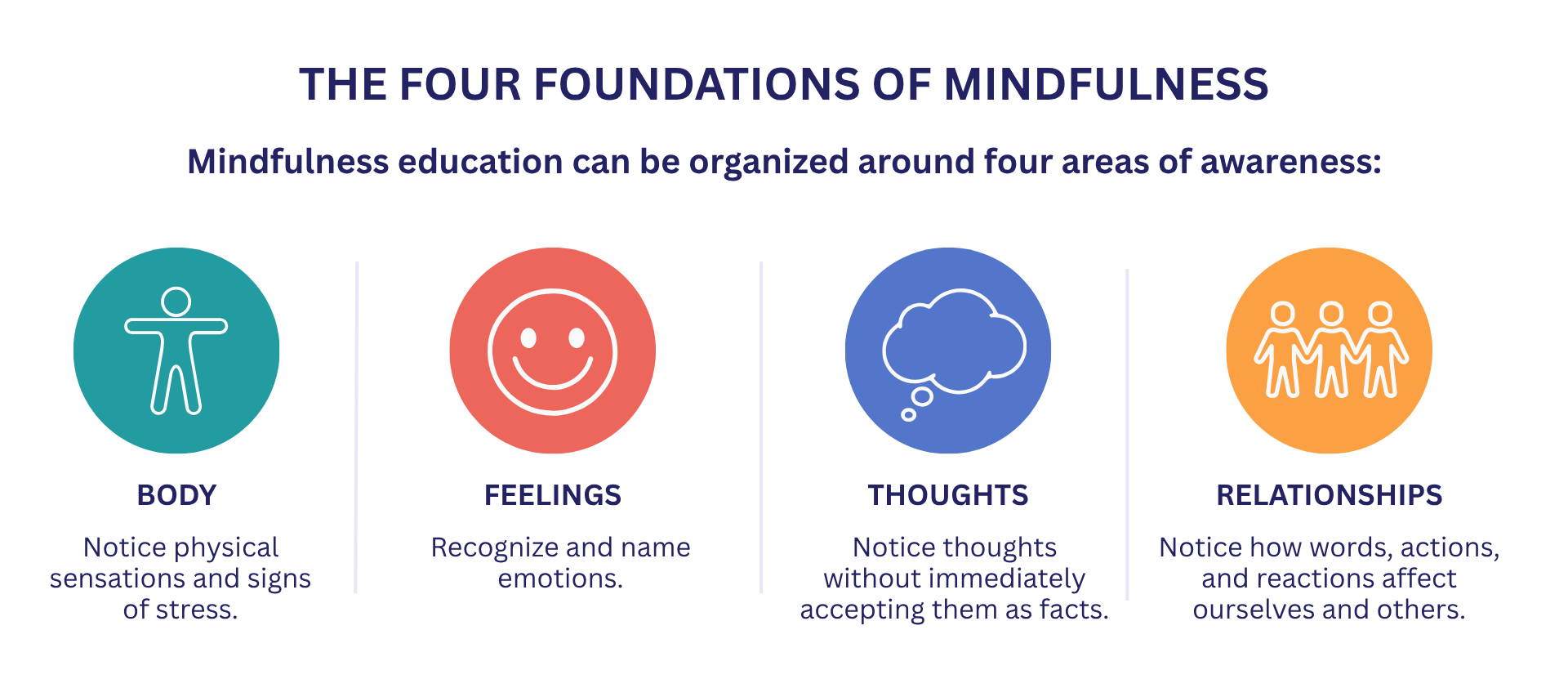
One helpful approach is to organize mindfulness education in ways that represent the four foundations of mindfulness: awareness of the body, awareness of thoughts, awareness of feelings, and awareness of relationships. Rather than presenting mindfulness as an abstract concept, organizing curricula around the four foundations helps introduce mindfulness skills in a more concrete way that young people can understand and practice in their everyday lives.
- Awareness of the Body
Stress often shows up in the body before young people have words for what they are feeling. A child may notice a racing heart, tense shoulders, stomach discomfort, or restlessness before they can say, “I feel anxious” or “I am overwhelmed.” Body awareness helps youth begin to recognize these signals.
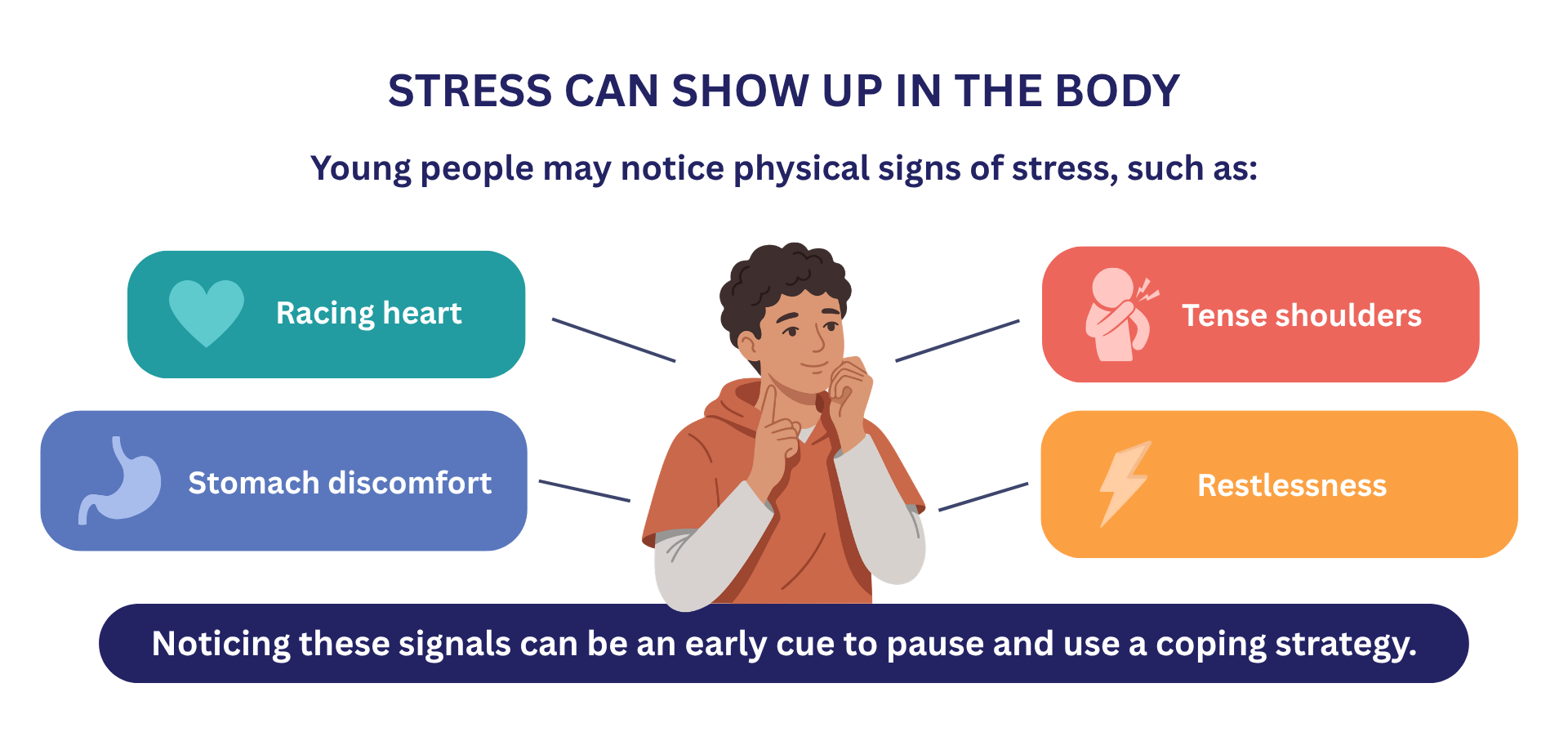
Mindfulness activities such as mindful breathing, body scans, and mindful movement can help children and teens notice what is happening in their bodies. For example, a child might learn to pay attention to their breathing, observe where they feel tension, or notice how their body feels before and after a calming activity. This awareness is important because it gives young people an early cue that they may need to pause, breathe, or use a coping strategy before their stress escalates.
- Awareness of Feelings
Children and teens often experience strong positive and negative emotions before they know how to label or manage them. Frustration, embarrassment, sadness, anger, and worry can sometimes lead to emotional outbursts, withdrawal, conflict, or impulsive decisions. Mindfulness teaches youth to notice feelings as they arise.
When young people learn to notice and identify their emotions, they can begin to understand what those emotions are telling them. They can also learn that feelings can be temporary and manageable, even when they feel intense in the moment. Rather than reacting automatically to a feeling, youth can practice responding with greater awareness.
- Awareness of Thoughts
Young people are constantly interpreting the world around them. They may think, “I’m going to fail this test,” “My friend is mad at me,” or “I can’t do this.” These thoughts can strongly affect how they feel and behave.
Awareness of thoughts helps youth notice their thinking patterns without immediately accepting every thought as fact. This does not mean ignoring problems or pretending everything is fine. Instead, mindfulness helps young people pause and observe their thoughts with curiosity. Over time, they can learn that thoughts come and go, and that they can choose how to respond to them. For example, instead of reacting to a stressful thought with panic or avoidance, a student may learn to take a breath, recognize the thought, and decide what to do next.
- Awareness of Relationships
Mindfulness also involves noticing how our words, actions, and reactions affect our relationships with ourselves and others.
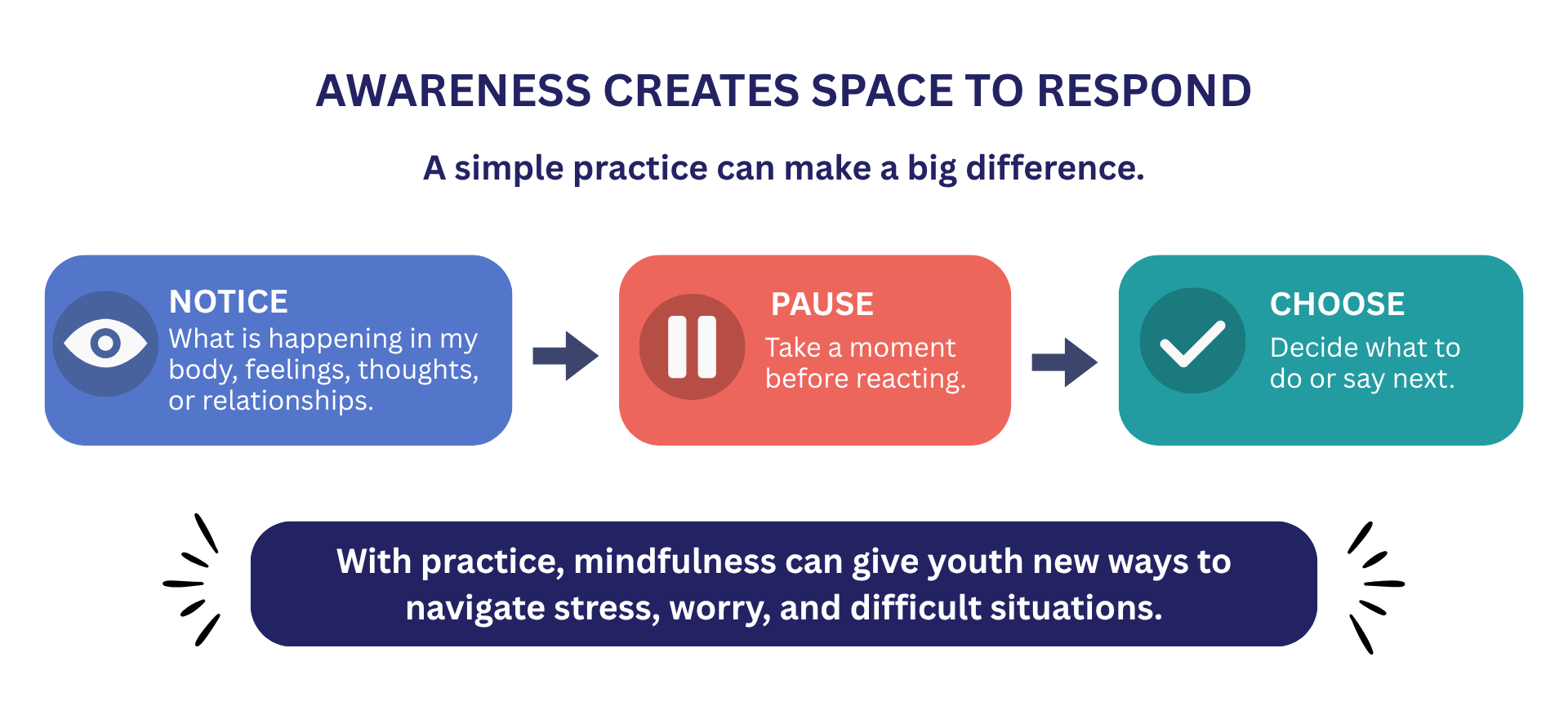
Awareness of relationships helps young people think about how they interact with peers, teachers, family members, and others in their lives. For example, a teen may learn to notice how they respond during conflict or how they communicate when feeling frustrated. In addition, young people also learn how to feel and show compassion to themselves and to others. Many stressful moments happen in relationships (e.g., disagreements, pressure to fit in, conflict at home). By practicing mindfulness, young people can learn to stop and take a few moments to themselves before deciding what to do or say next.
By learning how to be aware of their bodies, feelings, thoughts, and relationships, young people can become equipped with new ways to deal with stress, worry, or anxiety.
Looking Ahead
iRT’s mindfulness education programs are organized around the four foundations of mindfulness to help young people understand what is going on inside of their minds and bodies, so they can respond in healthy, safe ways.
In the next article, we will explore how mindfulness can benefit people of all ages and why these skills are valuable not only for children and teens, but for the adults who support them as well.
Nhat Hanh, T. (1990). Transformation and healing: Sutra on the Four Establishments of Mindfulness. Parallax Press.
 English
  Español