
September 09, 2026, Durham, NC – Over the past several years, many adults who work with young people have noticed the same thing: today’s youth are facing increasing stress and anxiety. Whether you are a teacher, youth program leader, counselor, coach, mentor, clinician, or parent, you may have seen children and teens struggle with worries, frustration, emotional outbursts, difficulty focusing, or feeling overwhelmed by everyday challenges.
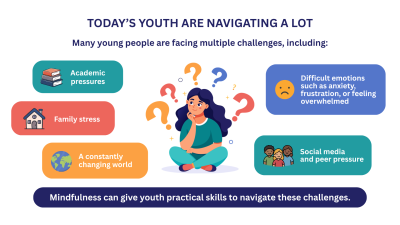
Many youth are navigating academic pressures, social media influences, family stress, and a constantly changing world, all while they are still learning how to understand and manage their own emotions, thoughts, and behaviors.
As schools, youth organizations, and families look for ways to better support children and teens, adults have been increasingly turning to using social-emotional learning (SEL) curricula to help young people acquire skills to manage both environmental and social stressors. One approach has received growing attention: mindfulness education. But what exactly is mindfulness? In this article, we will take a closer look at what mindfulness is, where it comes from, and why it has become an important part of many evidence-based youth programs and school curricula.
What is Mindfulness?
Although mindfulness has become very popular in recent years, the concept itself is far from new. Mindfulness has roots in contemplative traditions that are thousands of years old. However, over the past several decades, researchers, psychologists, and educators have translated mindfulness practices into evidence-based programs that can be used in healthcare, homes, positive youth development organizations, and schools.
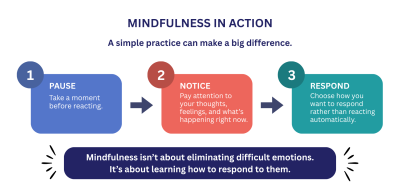
Mindfulness has been commonly defined as intentionally paying attention to the present moment with openness, with curiosity, and without immediately judging our thoughts or experiences. Rather than trying to eliminate difficult emotions or stressful situations, mindfulness helps people notice what they are experiencing so that they can respond thoughtfully, instead of reacting automatically.
Think about the last time you paused to take a few slow breaths before walking into an important meeting, giving a presentation, or having a difficult conversation. That moment of awareness with your breathing may have helped your mind and body feel calmer, which could then lead to thinking more clearly or responding more intentionally. That is mindfulness in action. For students, those same skills can help before a challenging test; after a disagreement with a friend, teacher, or family member; or during moments of frustration when learning a new skill or topic.
Why Teach Mindfulness to Children and Teens?
Research suggests that school-based mindfulness programs can help children and teens strengthen important life skills, including attention, self-regulation, emotional awareness, and coping.
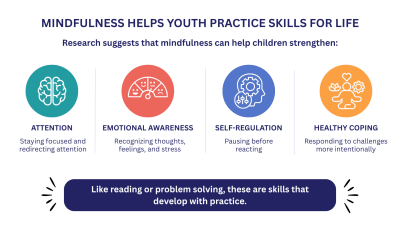
In addition to these executive functioning and coping skills, these programs have also been associated with increased social skills and more positive, calm classroom climates. Notably, these protective skills support students not only in school but throughout their lives.
However, children are not born knowing how to recognize stress, calm strong emotions, or shift their attention when they are distracted. Self-regulation is a skill that develops over time. Teaching mindfulness in childhood gives students opportunities to practice these skills before the social, academic, and emotional demands of adolescence increase. As children grow, those skills can become part of how they approach challenges in their daily lives.
Looking Ahead
In the next article, we will explore what is means to be mindful of the body, emotions, thoughts, and relationships, and how iRT uses these desired outcomes to structure their mindfulness education programs. Stay tuned for our next article in this series.
Brown, K. W., Ryan, R. M., & Creswell, J. D. (2007). Mindfulness: Theoretical foundations and evidence for its salutary effects. Psychological Inquiry, 18(4), 211–237. https://doi.org/10.1080/10478400701598298
Dunning, D. L., Griffiths, K., Kuyken, W., Crane, C., Foulkes, L., Parker, J., & Dalgleish, T. (2019). Research Review: The effects of mindfulness‐based interventions on cognition and mental health in children and adolescents–a meta‐analysis of randomized controlled trials. Journal of Child Psychology and Psychiatry, 60(3), 244-258.
Phan, M. L., Renshaw, T. L., Caramanico, J., Greeson, J. M., MacKenzie, E., Atkinson-Diaz, Z., … & Nuske, H. J. (2022). Mindfulness-based school interventions: A systematic review of outcome evidence quality by study design. Mindfulness, 13(7), 1591-1613.
 English
  Español